
Supplement Recipe Check
Betaine Anhydrous (TMG)
Distinguish TMG from betaine HCl, understand the limits of homocysteine and exercise research, and check serving amounts and overlapping supplements.
TMG is betaine anhydrous, not the same supplement form as betaine HCl. A lower homocysteine result does not establish disease prevention, and research doses are not personal recommendations.
This page is for general reference, not diagnosis, treatment, a prescription or personal dosing advice. Seek qualified advice for persistent symptoms or medical decisions.
Sources checked:
What is TMG?
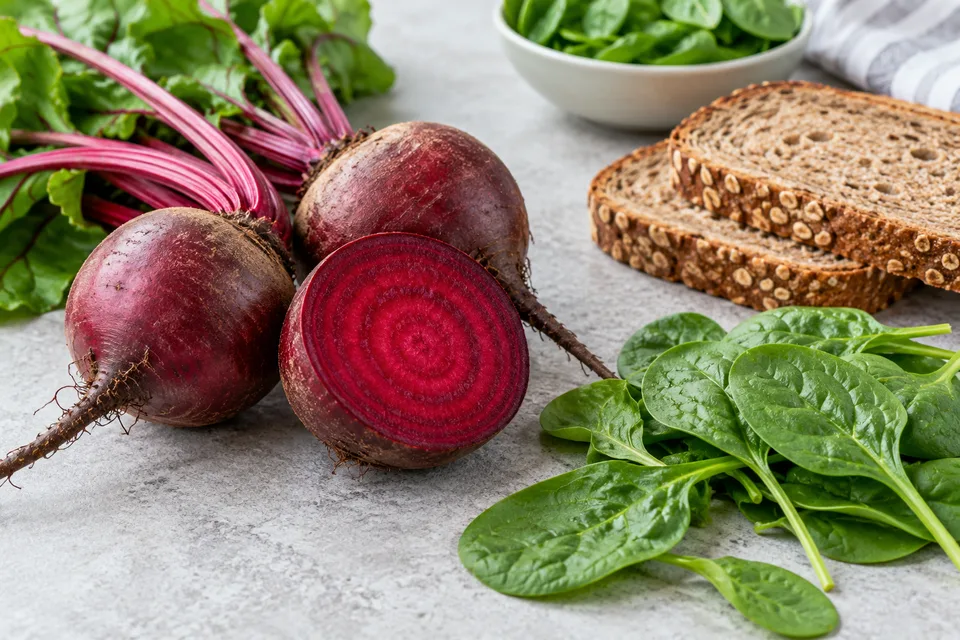
TMG stands for trimethylglycine, labelled betaine anhydrous in supplements. It participates in methyl-group transfer and occurs in foods including beets, spinach and whole grains. Its role as a methyl donor does not mean everyone needs an additional supplement.
NIH ODS: Betaine and exercise performance · EMA: betaine forms and pharmacology
What to check on the label
- Look for TMG, Trimethylglycine or Betaine Anhydrous. Betaine HCl and Betaine Hydrochloride refer to the hydrochloride form; do not substitute it for the same purpose.
- Check how many capsules make one serving. If two capsules provide 1,000 mg, the total for those two capsules is 1 g. This is a label-reading example, not a recommended dose.
- Distinguish single-ingredient TMG from pre-workout or B-vitamin blends. A blend total is not necessarily the amount of TMG. Add up TMG across overlapping products.
NIH ODS: Betaine and exercise performance · EMA: betaine forms and pharmacology
Questions before taking a supplement
How is it different from betaine HCl?
TMG and betaine hydrochloride differ in their labelled form and usual context of use. TMG appears in methyl-donation and exercise research; HCl is discussed in the context of gastric acidification. Do not assume TMG provides the same digestive role as an HCl product, or replace TMG with HCl at doses used in TMG studies.
Does lowering homocysteine prevent cardiovascular disease?
A 2024 randomized crossover trial in physically active men found lower blood homocysteine after betaine supplementation. It did not test prevention of heart attacks or strokes. An elevated result warrants assessment of its cause, not simply a self-directed increase in TMG.
Can it improve exercise performance?
In a 2025 double-blind crossover trial of 21 male and female recreational cyclists, two weeks of 3 g daily improved a 60 km time trial by about 1.4 minutes on average versus placebo. Gut permeability and the measured muscle-damage markers did not differ. This small, short, sport-specific trial does not guarantee benefits for all exercise or recovery. Its 3 g dose is not a personal recommendation.
Does it build muscle?
A six-week trial in 23 resistance-trained men reported improvements in some body-composition measures and bench-press training volume with 2.5 g daily. Maximum-strength tests did not differ between groups. Exercise findings are mixed: body composition, maximum strength and endurance should not be presented as interchangeable outcomes.
Cholewa et al. (2013): six-week resistance-training trial · NIH ODS: Betaine and exercise performance
Is more better?
No. An analysis of randomized trials in healthy adults found that 6 g daily for six weeks increased LDL cholesterol and triglycerides versus placebo. This does not predict the same change at every dose or in every person, but it argues against assuming higher amounts are better. Discuss supplementation first if you have high lipid levels or are receiving treatment.
Is prescription betaine the same as a general supplement?
Betaine anhydrous is also the active ingredient of a medicine for inherited homocystinuria. That treatment requires specialist supervision, blood tests and consideration of diet and other therapies. Do not copy medicine doses without a diagnosis or replace prescribed treatment with a retail TMG supplement.
When to seek advice first
During pregnancy or breastfeeding, or for a child, do not use exercise studies in adults as proof of safety; seek qualified advice first. Medicinal-product information reports nausea, diarrhea and abdominal discomfort. In particular, CBS-deficient homocystinuria requires specialist management because methionine can rise and cerebral edema can occur. This warning concerns that disease and treatment setting; it does not mean cerebral edema is a common reaction in general supplement users.
EMA: Cystadane product information · EMA: Cystadane (betaine anhydrous)
Related ingredient notes
Related reading, not a recommendation to combine supplements.
Search results are not recommendations or proof of benefit. Check for HCl, the full label and the amount per serving.
Editorial update:
Leave a quick note about this ingredient